Leading with Purpose: Strengthening Literacy and Leadership in Myanmar’s Monastic Schools
Posted: 9 November 2026
Moe Myint Khaing
Intake 2022 alumni
Master of Educational Leadership, Monash University
For more than twenty years, Moe Myint Khaing has been at the heart of Myanmar’s monastic education sector. She began her journey in 2002 at Phaung Daw Oo Monastic Education High School in Mandalay, where she managed human resources, supported teachers, and trained peer educators on HIV/AIDS and reproductive health. Later, at the Monastic Education Development Group (MEDG), currently known as Phoo Pwint Wai Thi (PPWT), her role expanded to overseeing training programs for teachers and principals. As her responsibilities grew, she worked closely with school leaders, teachers, and State and Regional Head Monks, gradually realising that “managing programs and operations was not enough.”
She wanted to see the bigger picture, whether education programs were truly addressing the right needs, and how leadership could be strengthened so that schools themselves could lead improvement.
“I asked myself constantly: How can I do this better?” That question became the driving force behind her decision to pursue a Master of Educational Leadership at Monash University through the Australia Awards Scholarship.
Her time in Australia was transformative. She recalls how seeing diversity and inclusion in practice reshaped her thinking:
“One phrase that has stayed with me is: Context matters.”
Living abroad also taught her resilience and the importance of community. She began to question whether programs designed for the majority were overlooking children from different ethnic, linguistic, and social backgrounds. This new perspective continues to guide her work today.
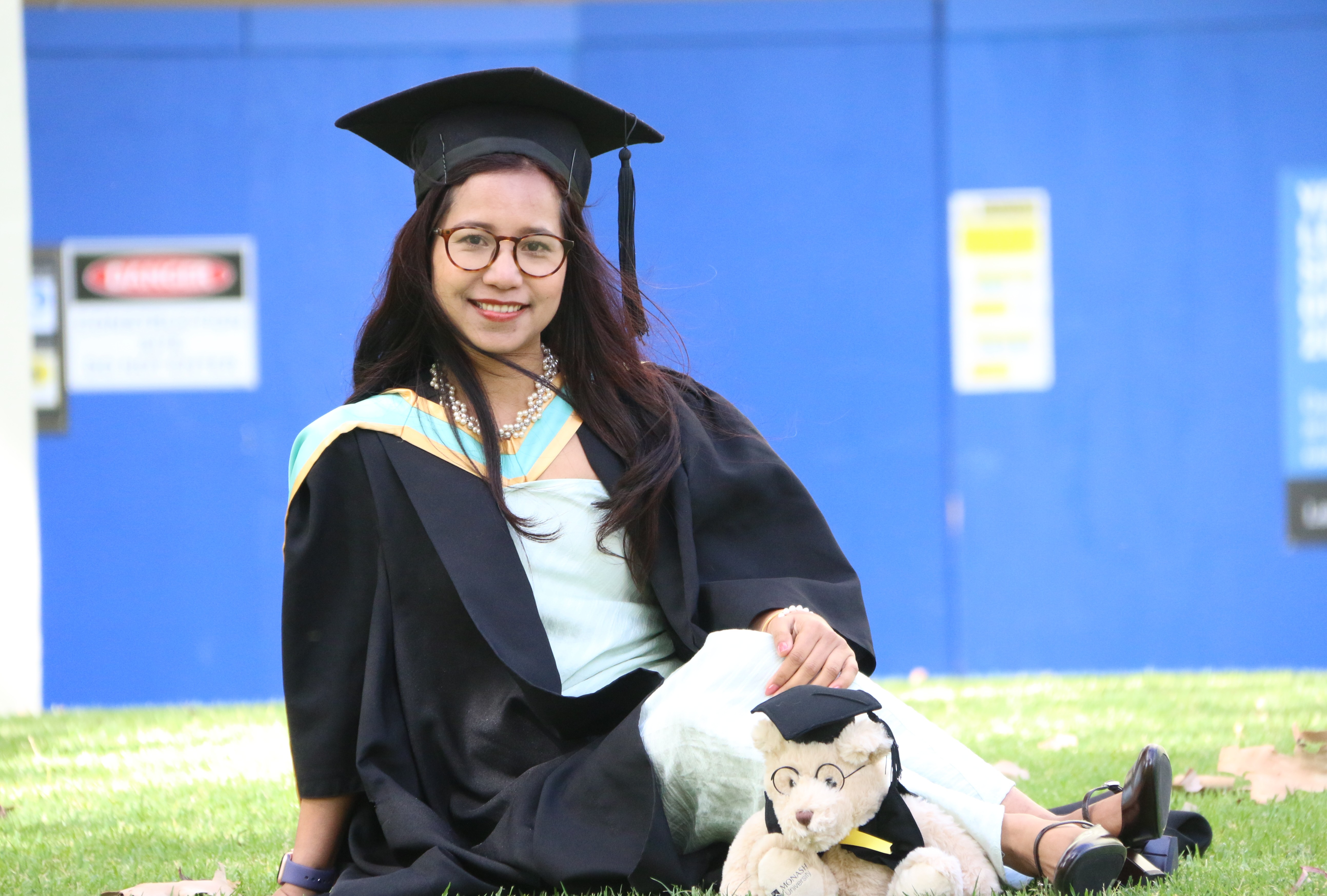
Moe Myint Khaing during her Australia Awards journey in Melbourne, pictured at her graduation and participating in an Australia Awards event.
Since returning to Myanmar, Moe Myint Khaing has applied her learning at every level. She has embedded evidence-based decision-making into organisational strategy, prioritised leadership development for school principals, and represented monastic education perspectives in national and international forums. She is developing a contextualised leadership pathway for monastic school leaders, blending culturally grounded facilitation, face-to-face learning, and technology through MeConnect.
Her contributions extend to literacy and numeracy research across 30 monastic schools in Mandalay, Sagaing, Magway, Bago, Shan, and Mon. In June 2026, she helped lead a validation workshop where school leaders reflected on preliminary findings and discussed how to better support students. “The main goal is to generate evidence and use it to improve future education support,” she explains. This work is helping ensure that classroom interventions respond to students’ actual learning needs.
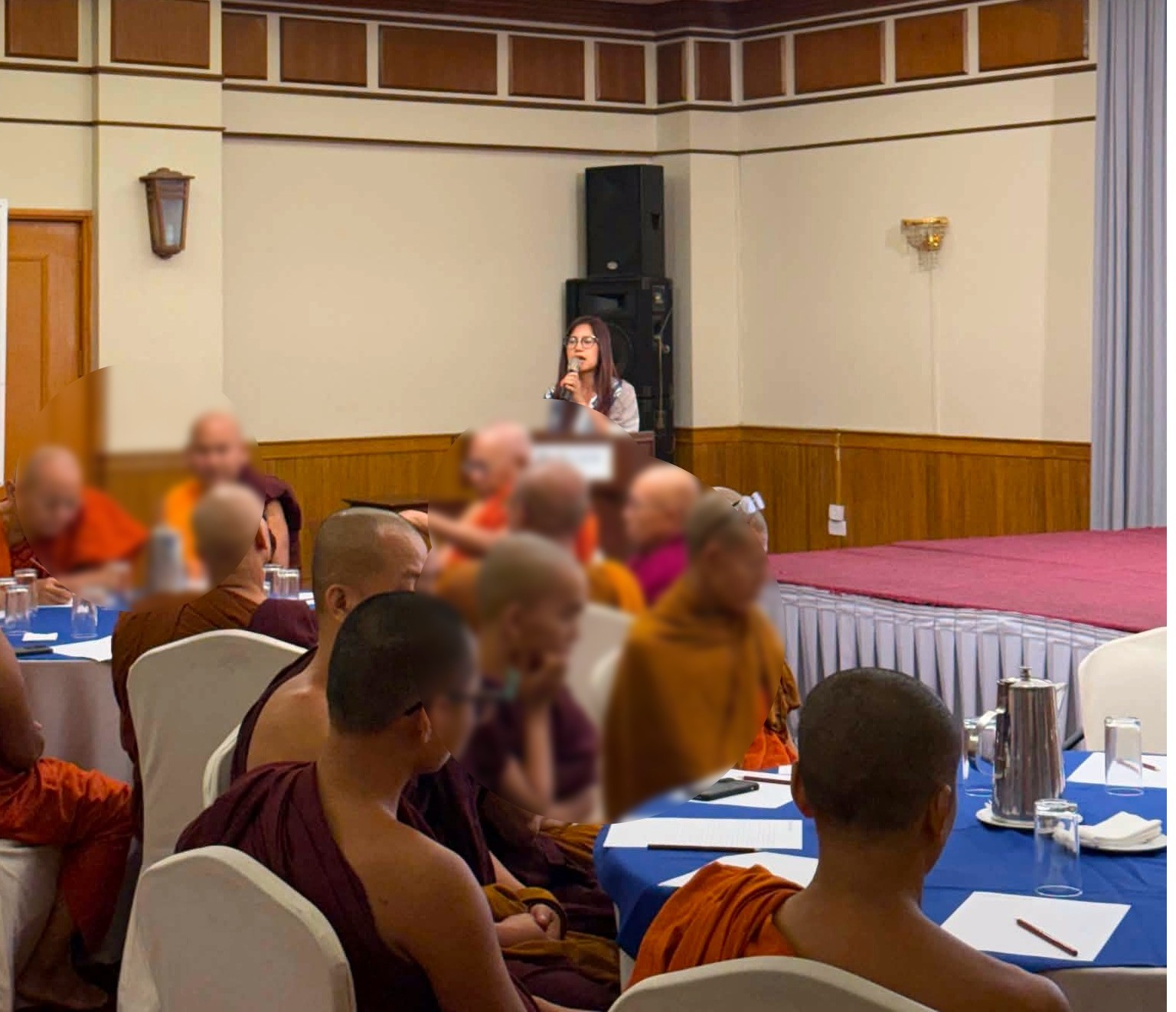
Moe Myint Khaing delivering the opening speech at the Validation Workshop in Yangon, bringing together representatives from 30 schools (13 June 2026).
In her leadership role at Phoo Pwint Wai Thi (PPWT), she also directs education programs for children affected by displacement, conflict, and natural disasters. Monastic schools continue to welcome internally displaced children alongside local students, and PPWT supports them with learning materials, teacher training, psychosocial support, and school grants. She is also helping design alternative pathways such as Non-Formal Primary and Middle Education for children unable to access formal schooling.
“My role is not to deliver everything directly, but to set the direction and guide programs so they respond more effectively to children’s needs.”
Her vision is clear: equitable, relevant, and context-responsive education for children in the monastic system. She sees her role as creating conditions for school and sector leaders to lead transformation themselves.
“I want school and sector leaders to increasingly identify their own challenges, understand their own contexts, and lead changes that are appropriate for their schools and communities.”
Moe Myint Khaing’s work demonstrates how literacy, effective leadership, and evidence-based practice can come together to improve educational opportunities for children. By applying the knowledge and perspectives gained through her Australia Awards Scholarship, she is supporting monastic school leaders to understand learning needs, strengthen teaching practices, and develop solutions suited to their communities. Her contribution is helping lay the foundation for more inclusive and sustainable education in Myanmar.